

Many artists wonder why their brushes do not hold their shape as well as they would like.
The durability and longevity of brushes depends mainly on how we look after them.
First of all, we will talk about correct use, because if we use them correctly, we will prevent damage later on. Good handling, cleaning and conditioning will ensure that they last and maximise their useful life. It is important to understand how to care for the different types of synthetic and natural brushes, and also how to clean them according to the technique used.
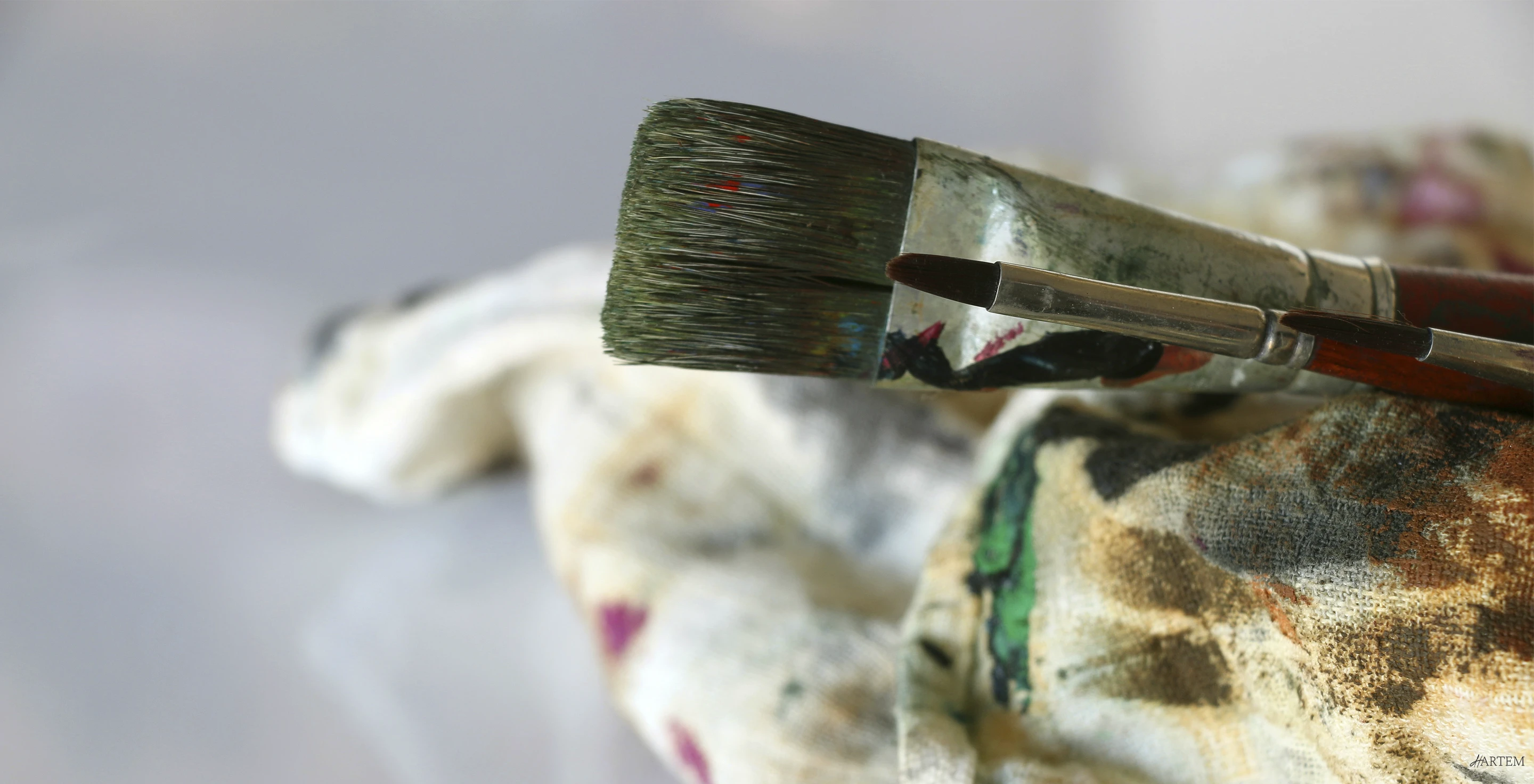
How to clean brushes according to technique
The main difference lies in the latter, depending on whether we are working with water-based or oil-based materials, resins and so on.
- Water-based techniques: first remove excess paint from the brush with a piece of paper or cloth, in the same direction and without rubbing. To clean the inside of the brush, put soap in the palm of your hand and rub in circles with a damp brush. The dirt will gradually come out. Repeat this process as many times as necessary until the water and lather come out clean. If you are using a bar of soap, you can rub it directly. There are also special soaps with conditioners for brushes that clean deeply and also leave the hair softer.
- Oil techniques: we remove the maximum amount of paint from our brushes with a piece of paper or cloth, from the root to the tip. Then dip the brush in the appropriate solvent for the paint. Press both sides lightly against the base to loosen more pigment particles. If we use a metal sieve to filter out impurities and reuse the solvent, we must be careful not to rub it too much, as this will damage the hair more easily.
Dry the brush with a cloth and clean it in the same way as for water-based techniques, except that you will need a neutral natural soap or a special one for oil brushes, and hot water.
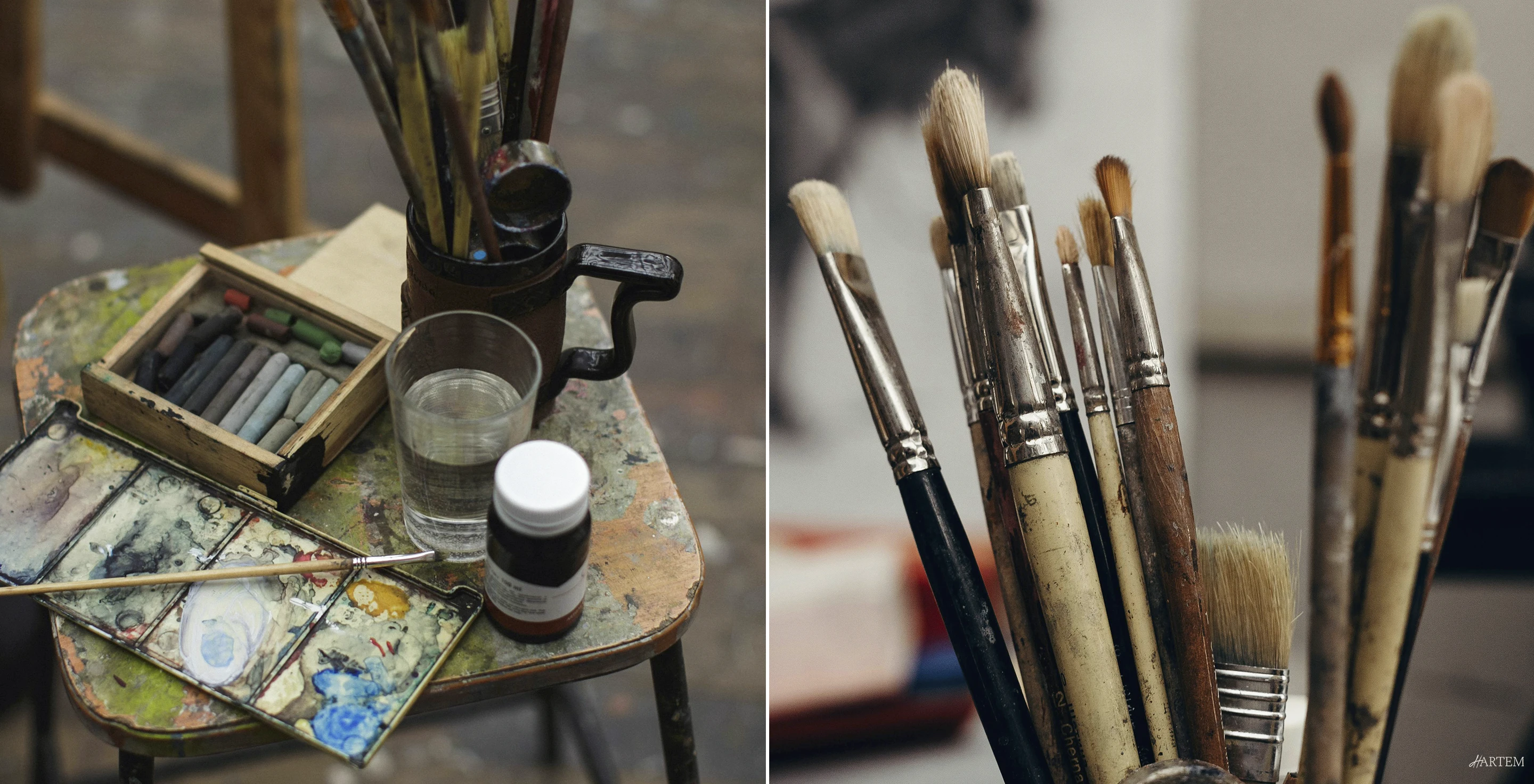
Other ways to take care of your brushes
There are differences in the way brushes are cleaned. However, there are certain patterns that apply to all types of brushes:
-
- It is recommended to shake the bristles before using the brushes. You may have noticed that between uses and when we use a new brush for the first time, the hair is slightly compacted. It is necessary to remove this 'cast' in order to remove any dust or residues that we have not cleaned properly and to free the fibres.
- Avoid product build-up on and near the ferrules, as well as on the handles. It will be more difficult to remove and may contaminate subsequent work.
- Immediate cleaning. Dry paint is much more difficult to remove and can damage the bristles. Likewise, leaving them to soak for a long time is not recommended either, as the tips can become deformed, especially if they are medium or chemical, which also deteriorate the hair.
Even while we are using them, even if it is not going to be long, keeping them wet with the residues contained in the water can accelerate the ageing process. - Change the water or solvent often to prevent our medium from becoming saturated with impurities, otherwise we will dirty our brushes instead of cleaning them.
- Conditioning. After cleaning and before storing, we can form them with our fingers and use conditioning products. This will preserve the quality of the fibres and keep them soft and supple.
If they are very worn or damaged, you can trim them a little with scissors. There are also restorative products for brushes that can significantly revitalise them. - Drying. It is important to dry the brushes as much as possible with a cloth or paper, and then lay them flat on a clean, flat surface. Ideally, avoid resting the bristles until they are completely dry.
- Storing: It is best to store brushes in an upright position with the bristles pointing upwards to avoid crushing and weight on the hair. They can be wrapped in waxed paper to protect them from dust and other external agents if they are to be stored for long periods between uses. It is also important to keep them in a cool, dry place, away from direct sunlight and heat, including artificial heat (electrical appliances, radiators, etc.).
- Protection. It is customary to get rid of the plastic cap that usually comes with new brushes. It is advisable to keep them and use them for as long as possible. There are also tip guards available for this purpose.
- It is recommended to shake the bristles before using the brushes. You may have noticed that between uses and when we use a new brush for the first time, the hair is slightly compacted. It is necessary to remove this 'cast' in order to remove any dust or residues that we have not cleaned properly and to free the fibres.
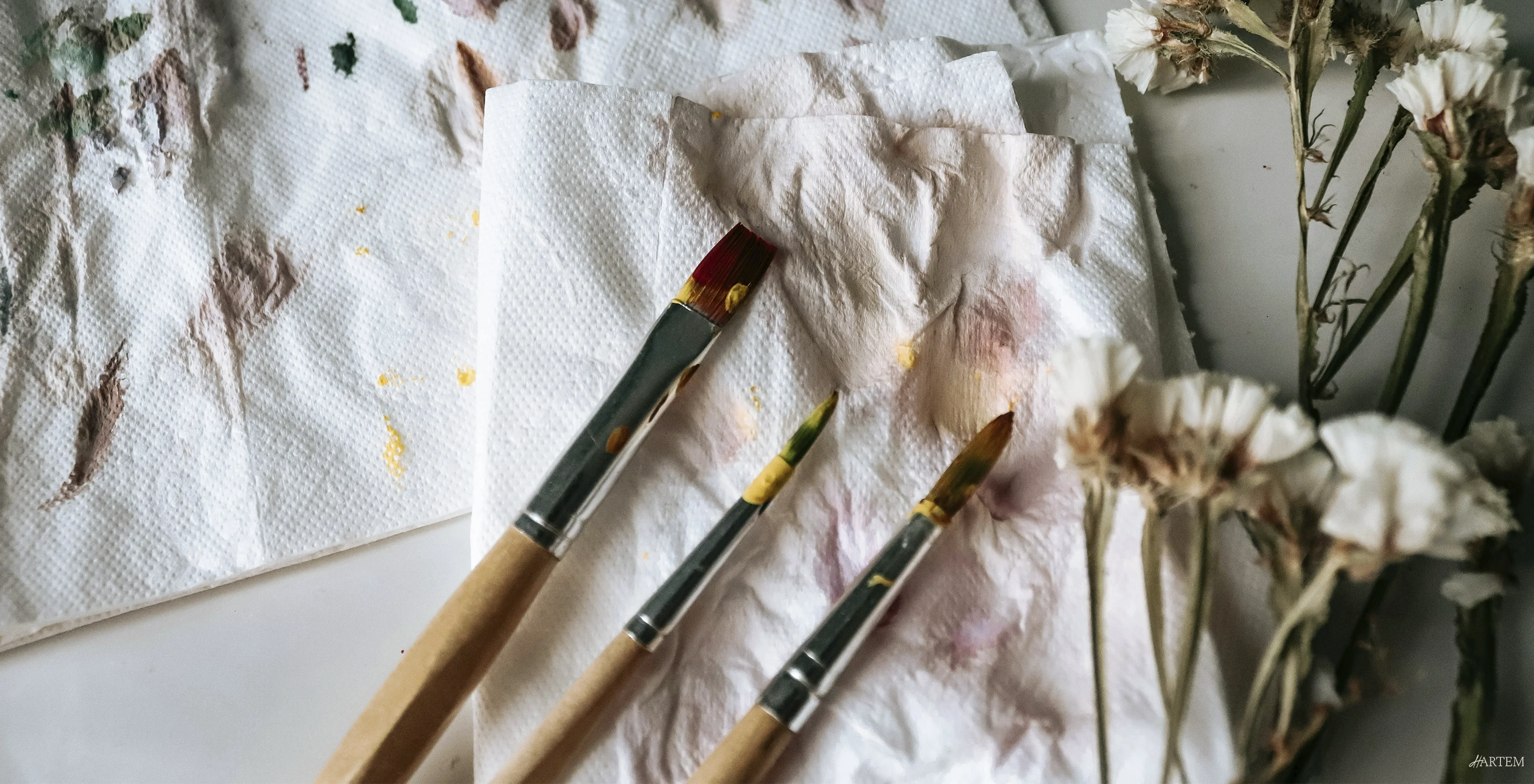
Investing in good quality brushes is the first factor that will determine how they will perform.
Nowadays, there are plenty of brushes of all kinds at affordable prices for all budgets and of different qualities. You will be able to buy good material for little money.
We will highlight some brands such as Escoda, Isabey and Raphäel, among others.
We recommend you to follow these tips to take the best possible care of your brushes.
They won't last forever, but they will last much longer and in better condition.


