

Watercolour is one of the quintessential painting techniques, whether in the world of fine art, amongst enthusiasts or even for young children. As it is a technique that is kind to both ourselves and the environment, it is one of the most popular choices.
Different types of watercolour
There are many types of watercolour available in different formats. Choosing the one with the properties you need will ensure your artwork looks perfect. We can mainly classify them by format:
X ![]()
![]()
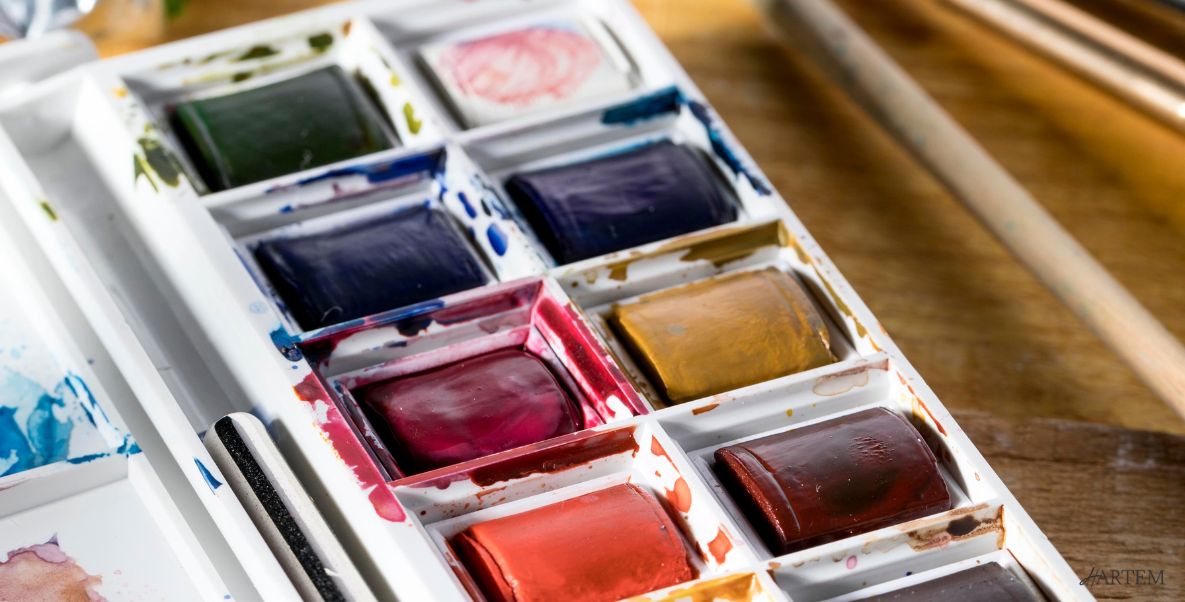
- Pigment sticks or tablets: These are dry, compressed watercolours contained in small containers that can vary in shape. They are activated with water, simply by running a brush over them or leaving a few drops on the tablet for a while, until a creamy texture is achieved. Among their advantages: they are very easy to use and store, and once dry, they do not stain and can be taken anywhere. They are available in half or wholepans, in sets or individually, allowing you to create a personalised colour palette.
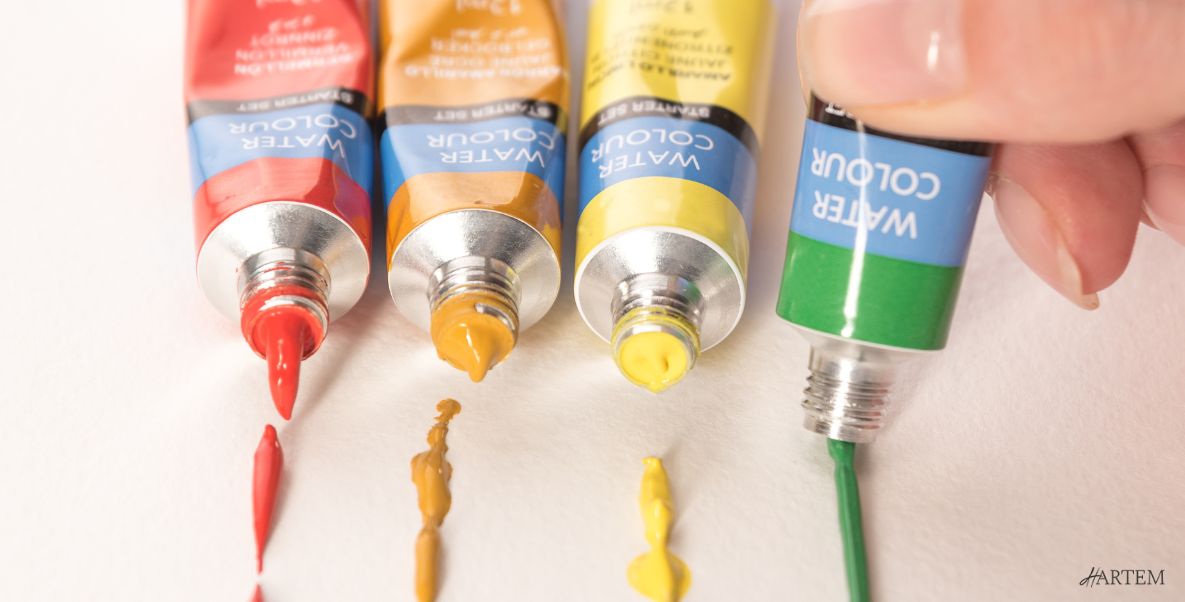
- Tubes: These stay moist for longer and provide greater pigmentation as the pigments are more finely ground. They allow you to create textures, either by using a generous amount or by mixing with mediums, and larger sizes are available for large-format work. You’ll also find them in ready-made sets as well as individually.
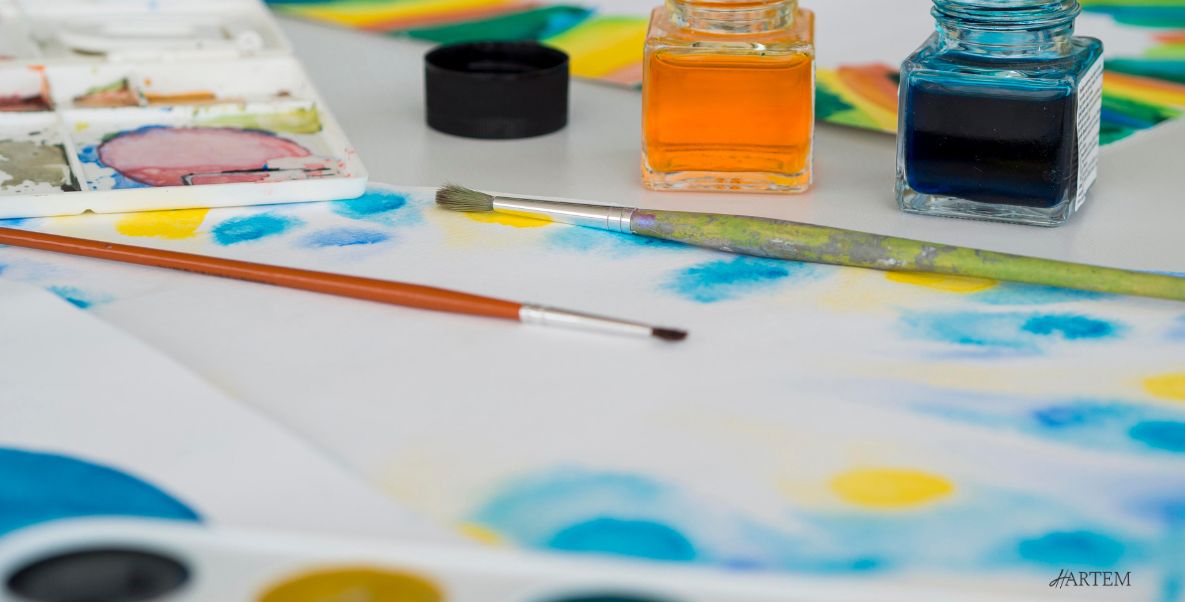
- Liquid: Alsoconsidered ink due to their similar, highly diluted consistency . They are completely soluble, meaning they can also be used with an airbrush. Their finish is more transparent and luminous, although they are slightly more complicated to use, as you’ll need to work on a very damp surface.
- Sticks or pencils: You can use these both dry and wet, in a similar way to how you would use a pastel. They are ideal for creating textures and covering large areas. Their shape may vary between brands and ranges, and the pigments used may be pure or contain additives; a standard stick contains approximately the same amount as a 5ml tube.
- Watercolour markers: Concentrated liquidwatercolour in marker form, which you can use to achieve washed-out effects by adding more water or apply directly. They offer great control and the ability to create very fine lines. This is why they are one of the favourite mediums for lettering. They are similar to liquid watercolours, so they are perfect for adding a touch of more intense colour.
- Watercolour crayons: Although they are not pure watercolours as such, they are equally reactive to water; they can be used dry or wet to achieve different effects. They are made from water-soluble wax and pigments, are soft yet durable, and offer exceptional coverage.
X ![]()
Now that you know all the different types of watercolours available, you’ll be able to choose the one that suits you best. We encourage you to try them out, experiment, and perhaps discover the one you like best. If you’d like to find out more about watercolours, don’t miss our social media channels and our blog post on watercolour labels.
X ![]()
Products related to this post
Do you want to give free rein to your creativity? Would you like to know which products we’ve mentioned in this post? Here they are:


