

Do you know all the classic materials used in dry-media drawing? Charcoal, chalk or conté, and carrés are the basic materials in drawing, used to create delicate lines or fill in large areas. Although the terms are sometimes used interchangeably, there are differences between them, and it is important to be able to distinguish between them so that we can use them appropriately in each of our drawings.
Charcoal
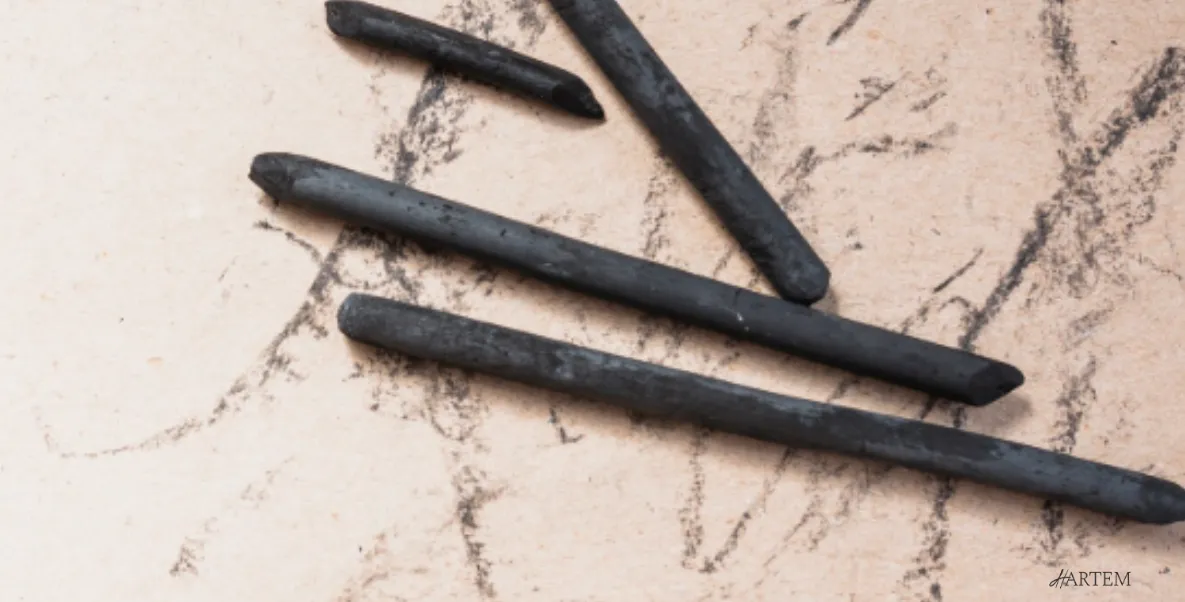
These are obtained by burning and carbonising wood, such as vine, willow or walnut, and give our lines a velvety, matt finish. They are known for their versatility in creating soft, blended tones that are easy to work with. They come in different formats and characteristics:
- Vegetable charcoal: This is the purest and most fragile type, though also the most popular because the sticks are fine and easy to handle; they can be broken, sanded, and so on. It can be used to achieve shades in a grey scale and is ideal for sketches, fine details and soft shading.
- Compressed charcoal: Another option made from pure charcoal, although slightly less so than the previous type. It is produced by compressing powdered charcoal and mixing it with gum, wax or some other binding agent. The leads are hard, ideal for precise lines and achieving almost black tones.
- Compressed charcoal pencils: These are charcoal sticks in the form of a lead, encased in wood. They differ somewhat from the traditional technique, but are perfect for adding precise details, providing very intense shades of black. Although they are more difficult to erase and blend, they are much tidier to store and transport.
- Powdered charcoal: This is similar to a pure pigment. It can be applied directly from the jar or tin, using any brush, sponge or material of your choice, and is very easy to erase. It is perfect for covering large areas quickly, achieving different effects or textures, and producing more subtle shades of darkness.
- Liquid charcoal: It has the smoothness of an oil paint, but dries quickly and can be reactivated with water like gouache. Once dry, it can be erased and blended.
- Watercolourable charcoal: Sticks that can be used dry and washed out directly on the paper, or grated and diluted to achieve a blend of effects with great intensity and depth.
Chalk and conté
These are pigment sticks, which are harder and oilier, offering greater definition and allowing for more precise and darker lines, although they are difficult to erase and blend. They are perfect for drawing fine lines and details, as well as for defining outlines. They come in pencil and stick formats and are made from compressed powdered pigment mixed with binders; depending on the pigment used, other varieties are available, such as sepia, sanguine and white chalk, which are also widely used in artistic drawing.
Carrés
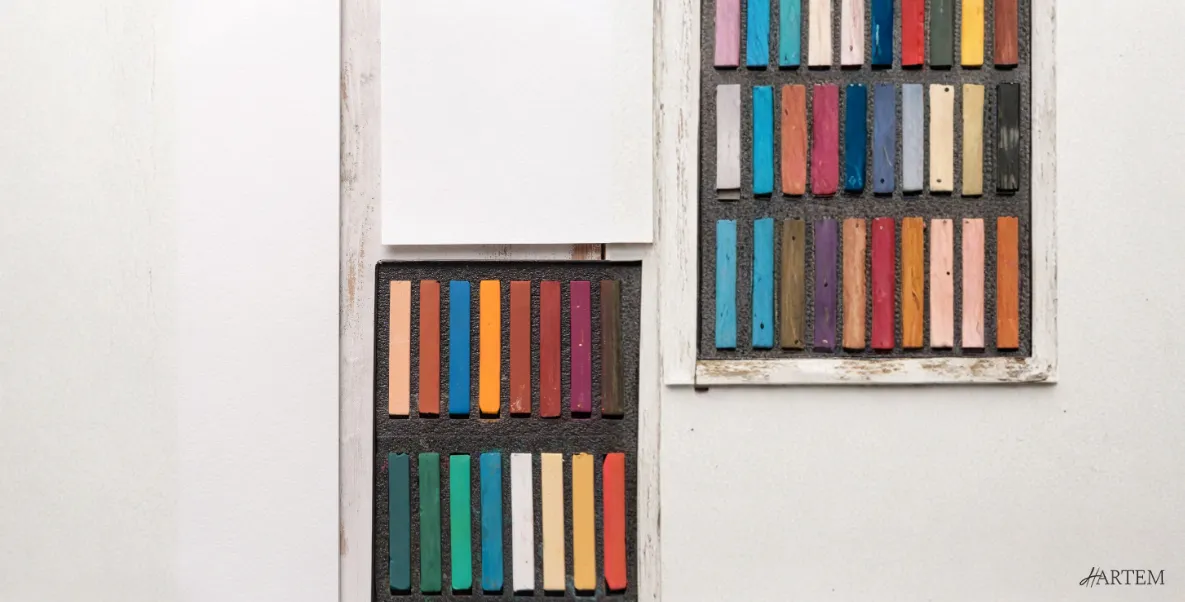
These are a specific type of chalk. The main difference lies in how they are applied: they are used to create chiaroscuro effects, by using the entire stick horizontally, rather than for drawing lines. Their composition is drier and they have very high pigmentation; one could say they are similar to pastels, but firmer thanks to the binders used in their manufacture. They are only available in stick form, though in a wide range of colours. To work with these dry techniques, it is useful to be familiar with the following materials, which will help you work more easily:
- Sandpaper block: for sharpening, removing the protective coating from the sticks and cleaning your materials.
- Mouldable eraser: to absorb pigment and subtly remove dust; it can also be shaped to reach the most difficult areas.
- Rubber or vinyl eraser: for erasing and achieving purer whites.
- Cotton or polyester cloth: perfect for creating gradients and removing excess material.
- Chamois leather: an essential for blending properly.
- String and pegs: to secure the paper in place and hold it steady.
- Brushes: for applying pigment directly or blending. You can also use a large one to cover large areas.
- Charcoal holder: perfect for keeping your hands clean whilst you work.
- Tinting or pastel paper: These techniques require a specific type of paper, as each side has different characteristics (smooth and rough) that allow the pigment to adhere better.
- Fixative: Use a charcoal fixative to seal your artwork and prevent it from smudging or deteriorating over time.
How to work with dry techniques.
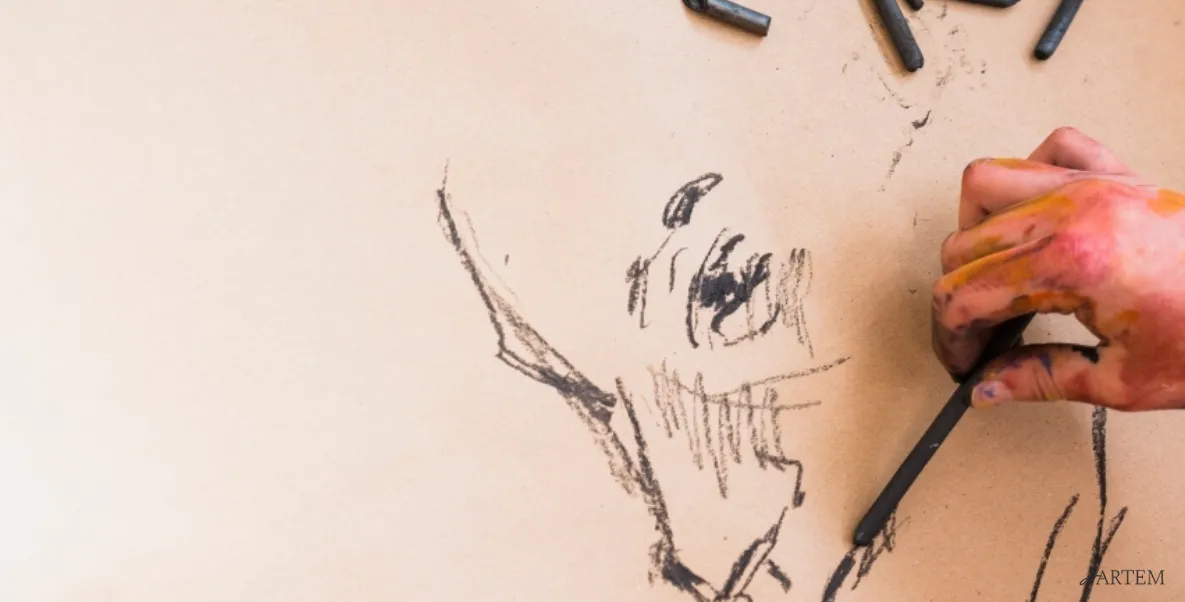
Do you already know how to use these techniques? Here’s a quick step-by-step guide:
- Place your paper on a board, table or flat surface. Make sure it’s completely flat and secure it all around with masking tape so that it doesn’t move or crease whilst you’re working.
- Start sketching out your design. You can draw lines or squares to use as a guide. Use a piece of string with a peg attached; by securing it to the board, you can move it around to create straight lines or mark out points. You can also use strings with a weight attached.
- Once the design is in place, start creating layers of soft smudges and blend them with your hands or any of the materials mentioned above. Remember that your hands may be greasy, which will leave marks on the paper or cause the ink to set into it, making it impossible to erase.
- It’s important to leave the areas you want to keep white untouched, as once they’re stained, you won’t be able to restore the paper to its original white colour, even if you try to erase them.
- Build up layers, gradually increasing the darkness, and continue to blend.
- Finish by creating the strongest contrasts of light and shadow with the contés. Use white to highlight the areas of light.
- Fix your artwork with a fixing spray.
- Remove the masking tape. If you frame your artwork, it will last much longer. Alternatively, store it properly in a folder or tube.
Products related to this post
Do you want to let your creativity run wild? Do you want to know which products we’ve mentioned in this post? Here they are:


