

Could you imagine painting with the smoothness of pastel, but with the versatility of paint? Would you like to be able to mix colours effortlessly, create perfect colour gradients, and achieve amazing detail without the worry of dust and smudges? PanPastel is here to revolutionise the way you create art. Discover the most versatile medium with an ultra-smooth texture, exceptional pigmentation, and innovative format to take your creations to the next level.
What is PanPastel, exactly?
Before we talk about all the features and functionalities of the PanPastel, let's briefly discuss what pastel is. In general terms, pastel is one of the most inviting techniques to let your creativity run free and obtain great results in every work of art. In addition to this, it is more comfortable than other techniques such as oil painting, as no solvent or similar is needed and it can be applied directly on the surface. It is a quick technique, easy to correct and very suitable for sketches, sketches or colour proofs. It can be found in both stick and pencil format.
As a result of 5 years of research and development, Bernadette Ward and Ladd Forsline created their company Colorfin and a small factory in rural Pennsylvania where they and their team have been manufacturing and shipping PanPastel Colors since 2007.
Bernadette and Ladd - Co-founders of Colorfin and co-creators of PanPastel.
Presented in a unique format that appeals to professionals and beginners alike, PanPastels capture and enhance the key characteristics of pastels with colours containing highly concentrated pure pigments. Thanks to their innovative manufacturing process, which requires a minimum amount of binders and fillers, these products have very intense, ultra-smooth and super-blendable colours. The pigments used are of the highest quality, with high lightfastness, especially compared to conventional pastel sticks.
The texture of the conventional ones may vary (hard or soft) but in general it is more powdery. With a small pigment load and in a few passes, PanPastels have a higher covering power. Also, sometimes pastels can be a bit tedious, as they tend to crumble and generate dust that does not favour the works, making them a somewhat less manageable option; but this does not happen with PanPastels, as they do not produce more dust than necessary, and soft gradients or fine details can be achieved.
“We saw that the cake hadn't changed from the stick format for hundreds of years. After a lot of experimentation, we developed the pan or pastille format, which makes the colours work like a dry, velvety paint, which brings many advantages.”
They are also a faster and cleaner way to achieve more even coverage for large blocks of colour, as each bottle contains 40% more material than most stick pastels.
Colour Chart
There are currently 92 highly pigmented colours and 5 mediums available both individually and in sets. Each colour is formulated with the highest quality pigments to ensure maximum lightfastness, which indicates how permanent it is and how unaffected it is by light.
The range includes 20 pure colours, 20 dyes, 20 shades and 20 extra dark, indicated by item codes. In addition, six metallic colours, six pearlescent colours and five mediums are also available. The metallic and pearlescent colours and mediums contain mica coated with titanium dioxide and iron oxide. The size of each container is 2.44” / 62 mm diameter.

How do we use PanPastel?
Although PanPastel and pastel sticks are similar techniques, there are several distinctions in the way they are applied:
Conventional pastel sticks are applied directly without using any other tools; however, PanPastel must be applied with Sofft tools: a new generation of applicators, made of a micro-sponge specially formulated for the application of PanPastel colours, as it transports and releases just the right amount of colour to avoid pigment and powder overload.
These tools can be found in a variety of shapes and sizes:
- Sofft Knives and Covers: painting spatulas with an absorbent, multi-purpose applicator for many techniques. The covers, which can be triangular, square, round or oval in shape, are made of latex-free microporous sponge that is semi-absorbent. Each spatula has been ergonomically designed to fit in the hand for ease of use and good control. They are perfect for covering large areas or details.
- Large sponges: Large latex-free sponges simulate the shapes of artist's brushes to allow for a wide range of strokes. Different effects can be achieved by using the sides and edges of the sponge. Many shapes and sizes are available. They are perfect for covering large areas.
- Applicators: smaller non-latex sponges are perfect for smaller marks and details. They are easy to clean (a few wipes on an absorbent surface such as paper between colour changes will suffice), although they can also be washed off. They provide a smooth, uniform finish and are very versatile, as they can be used with PanPastel colours and any other water-based medium (with inks, acrylics, etc.). They do not leave any brush marks. Ideal for blending). They can be used many times.
One of the most important and unique characteristics of PanPastel Colors is that they are dry colours (pastels) that can be mixed as fluid paints. As with any other painting medium such as oil or watercolour, there are various mediums that can be used to enhance their characteristics, such as the Colorless Blender, which improves the ‘flow’ and expands the mixing possibilities. The colour can be spread out (diluted) and become more transparent, but the colour itself remains the same.
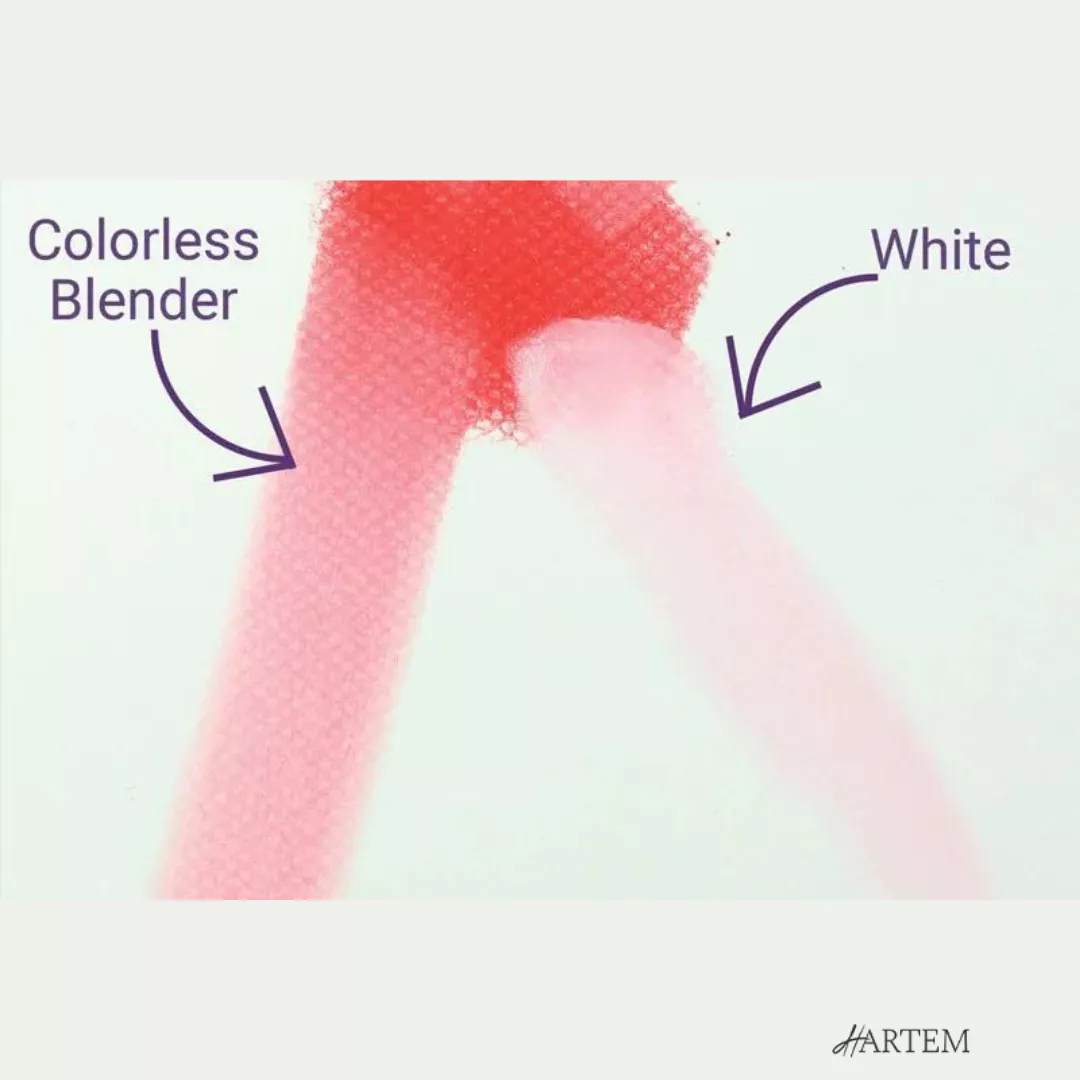
Pearlescent media, available in black and white, add lustrous sheen effects that change depending on the angle from which you look at them, also creating dimension. They are based on mica, an easily laminated mineral that adds a precious pearlescent effect and lustre.
Instructions:
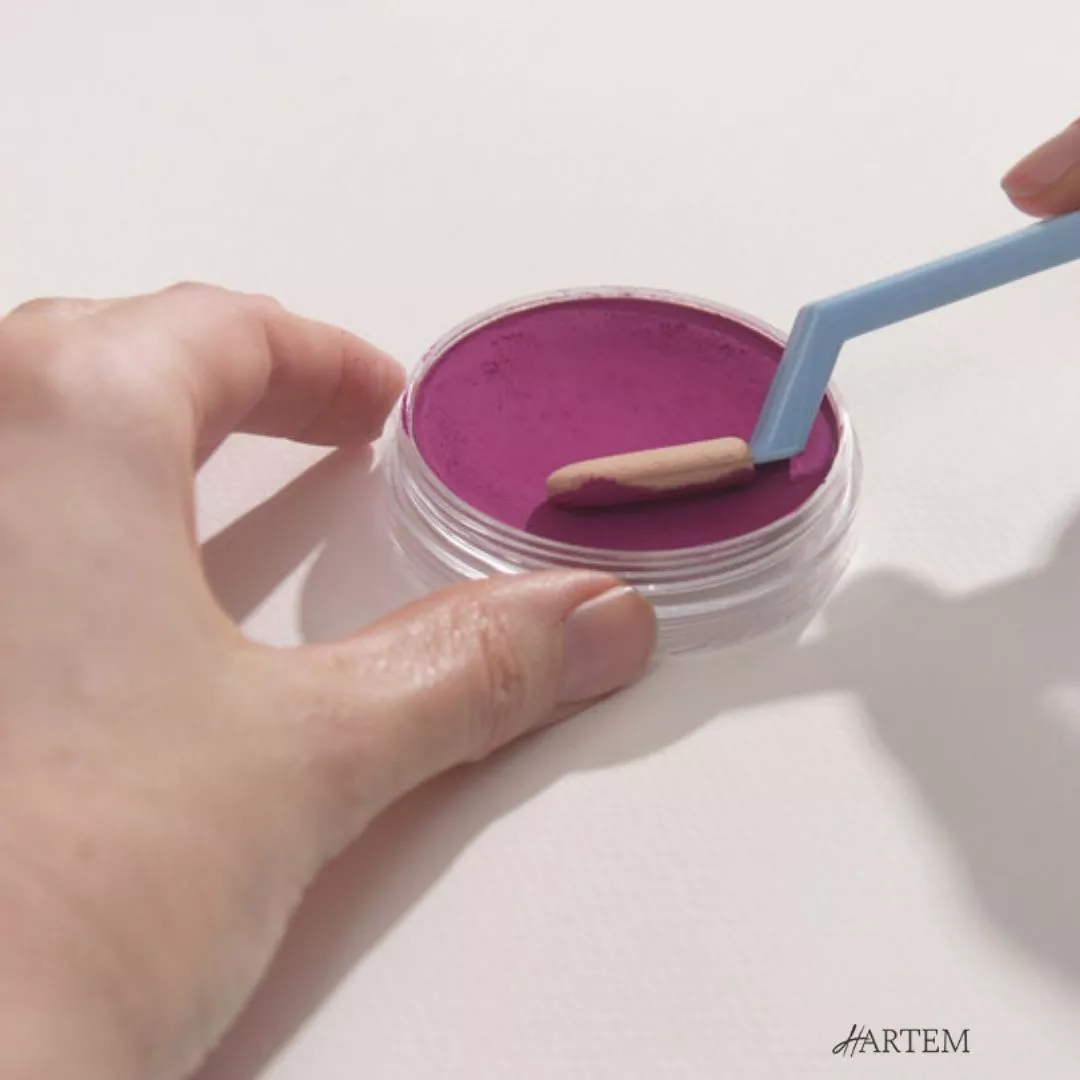
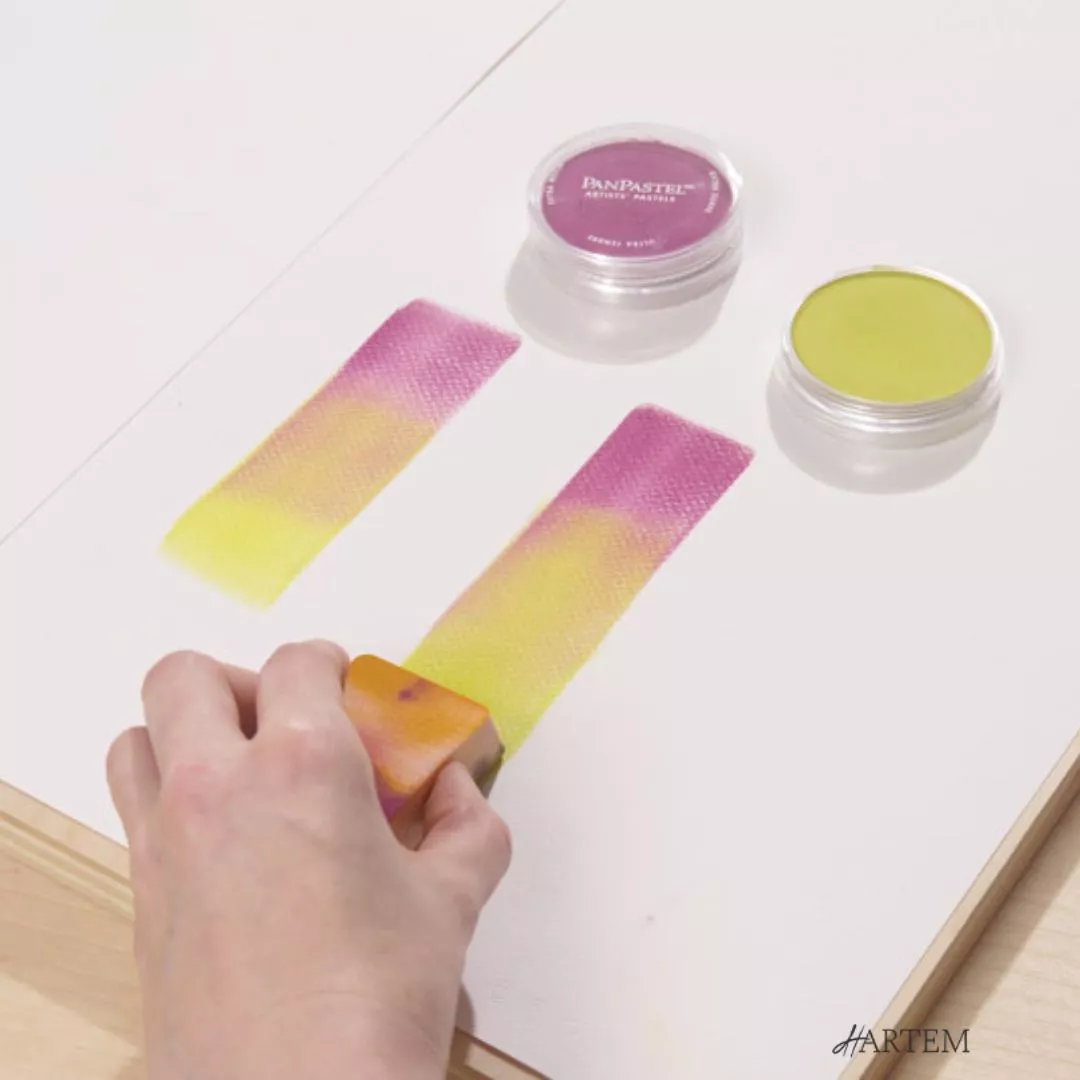
1. Pass the applicator on a spatula or sponge over the surface of the tablet in a circular motion 1 to 3 times. It is recommended not to pass it more than necessary because it could generate an excess of unwanted powder that would spoil the work. Passing it only once would hardly pick up any pigment.
2. Apply the paint on the work surface or paper. You can top up the colour as many times as necessary.
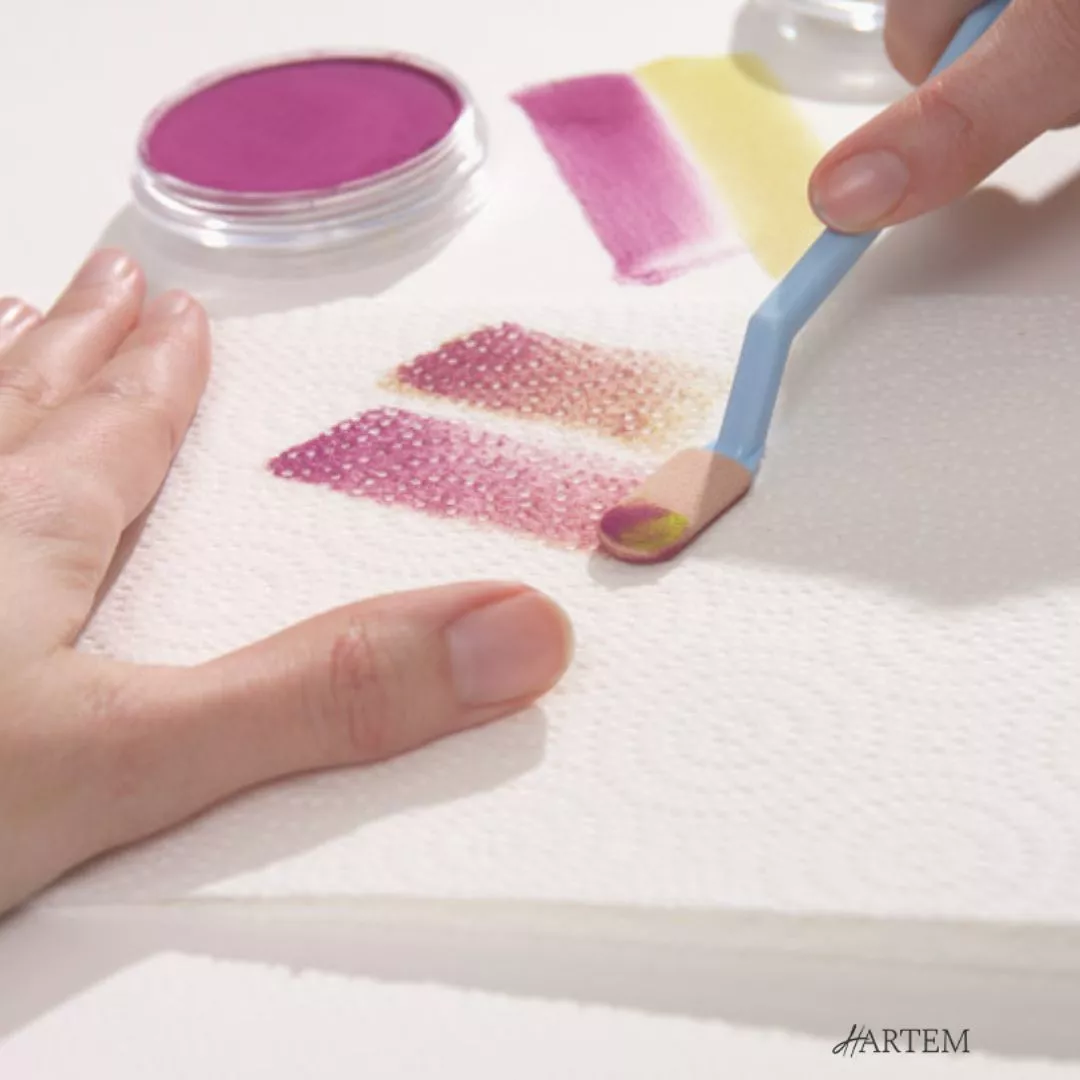
3. You can mix several colours to obtain intermediate colours, as you can follow the colour theory without any problem. There are several possibilities when mixing the colours: on the tablets (taking one colour and then another directly from the tablet), on the tool or on a separate surface. The colours can be erased with an eraser.
Recommendations, maintenance, and storage of materials
PanPastel colours can be used on almost all artist's surfaces, from very smooth to textured including: drawing papers, painting canvas, all paper surfaces, wood, printing papers, watercolour papers, special papers and handmade papers. Each surface will give a different end result. On smoother surfaces, the colour is deposited in more transparent layers. On higher tooth surfaces (textured), the colour is more intense as the tooth ‘picks up’ more colour from the sponge. It is best to experiment until the desired results are achieved.
As with conventional pastels it is recommended to use varnishes and fixatives to protect the works, PanPastels should ideally be given this layer of protection and fixation so that the works retain the properties of the colours.
PanPastel's use surfaces
This versatile art material invites a wide variety of applications and results:
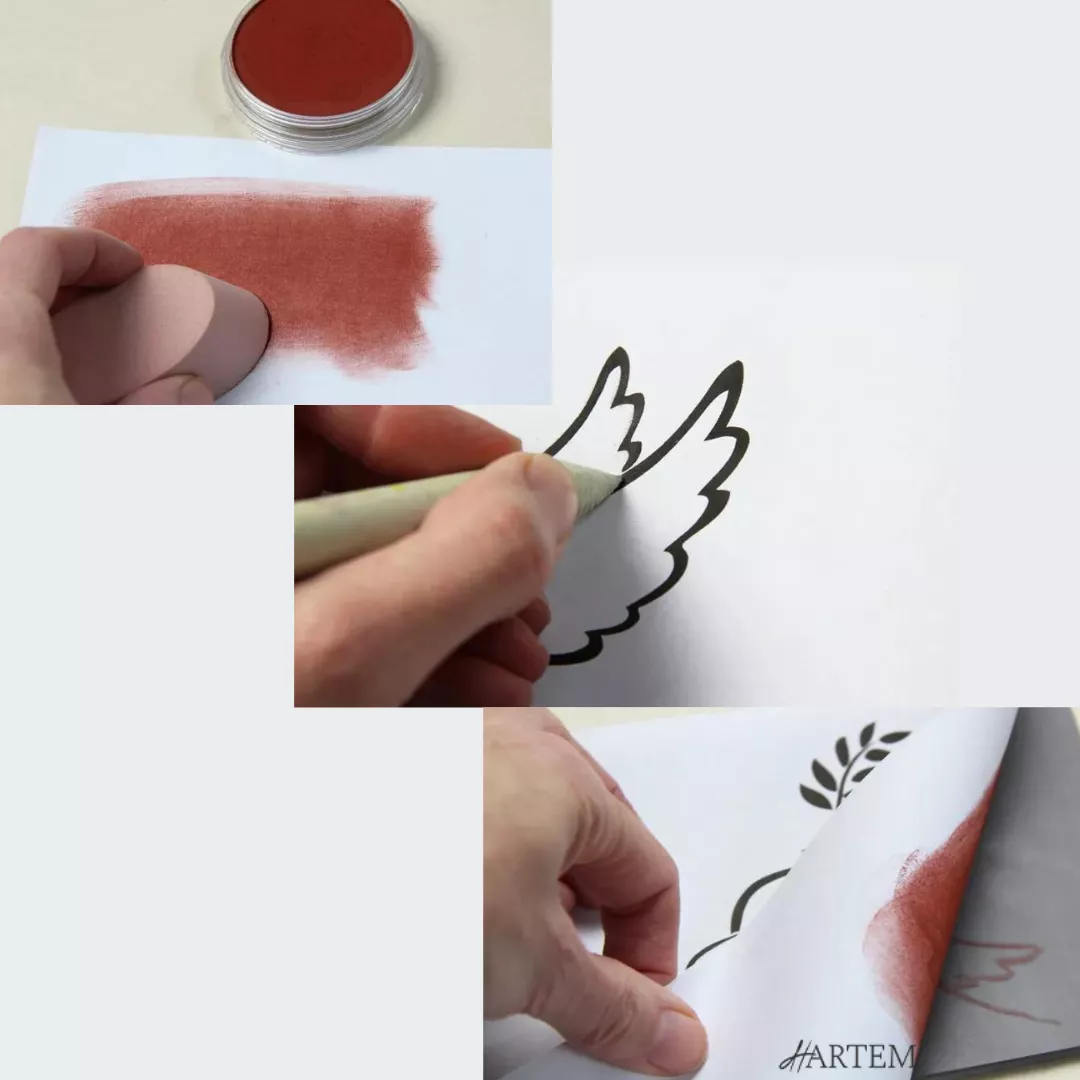
In drawing it can be used both to create final and finished works, as well as preliminary sketches, as line thicknesses can be adapted by varying the pressure and tools. They can be used to tone the surface to be worked on with the sponges, to then remove the desired areas with an eraser and provide light in what is known as subtractive drawing. If you are going to work on another surface such as linoleum, you can use the PanPastels to transfer what you are going to engrave. Simply cover the back of the desired image with a colour and outline the unpainted side.
Another common use is for pre-colour studies or the ‘Alla Prima’ technique, as the flexibility and expressiveness of PanPastels help to create the basis for what can later become an oil painting.
Within the world of painting, it can also be used to create colour bases, perfect gradients, pre-sketches and more. Painting with PanPastel is very similar to other media, except that the colours are dry instead of wet. They are instant, require no water or solvents, combine well with other media and work on almost any surface. There are also no drying times to deal with, as with wet paint, PanPastel can be corrected or changed with an eraser. In combination of all these features, PanPastel offers the possibility to work with both dry mixed media such as coloured pencils and pens to add finer details or pastel sticks to give texture; and wet media such as watercolours, inks, acrylics or gouache. They are also perfect for adding a touch of colour to encaustic artwork.
On top of all this, PanPastel works very well on digital papers, so you can colour ink or laser prints and digital photographs. The ability to apply controlled transparent colour layers allows the underlying print to show through, making the effect more visible on black and white photos.
In summary, PanPastel offers a cleaner, more controlled and versatile painting experience than conventional pastels. Its creamy texture and ease of mixing make it an excellent choice for artists of all levels, especially those looking to experiment with new techniques and effects.


