

There is a common lack of knowledge about the use of earth colours in painting and drawing. We tend to think that they will dirty our work, which is true if we do not apply them correctly.
If, on the contrary, you control their application, they can become your best allies.
These desaturated colours can be very useful for specific exercises such as portraits and skin colours in general, landscapes, sketches and more.
¿What is their origin?
The importance of these pigments in an artist's palette lies not only in their colour and stability, they are also especially valuable for their thinness, pigment capacity and transparency.
Earth, sienna and ochre colours are generally produced from pigments extracted from earth, although they are also created from mixtures of other pigments and oxides.
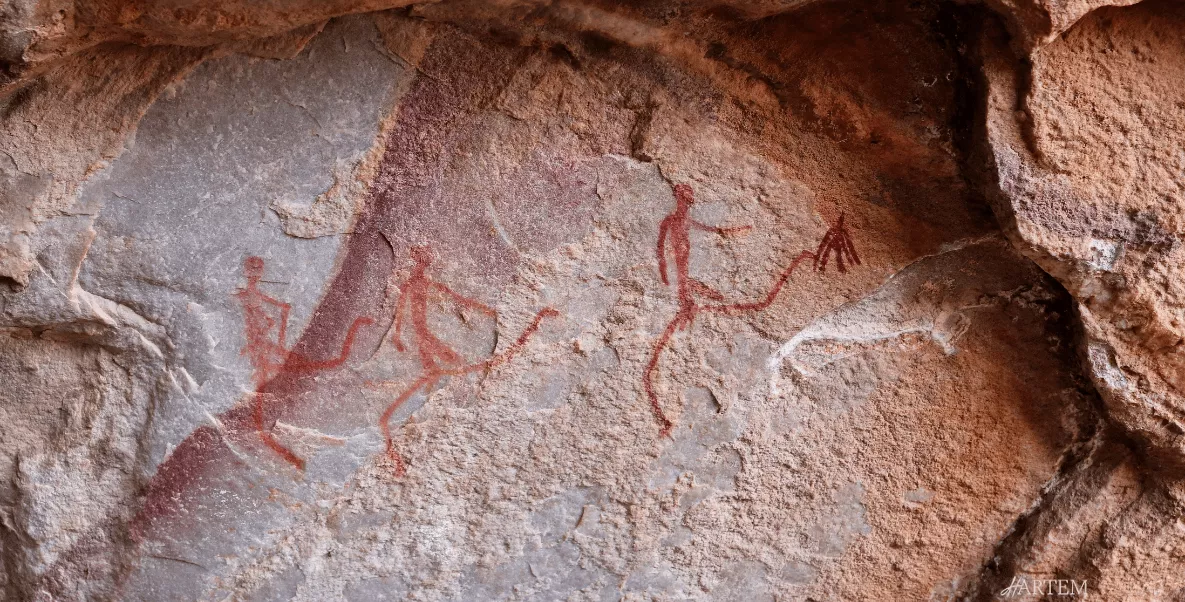
Their use dates back to cave art.
How do we classify earth colours?
They can be classified according to their origin:
- Siennas: very thin and translucent earth due to the sedimentation and quantity of silicates in the soil. It allows the creation of very luminous glazes. Ideal for landscapes.
They have a very good stability and permanence.
There are different shades of sienna (red, orange, yellow...) and toasted.
We can simplify them into four types:
- Natural Sienna.
- Toasted Sienna.
- Natural Shade.
- Toasted shade. - Ochres: They get their colour from the iron hydroxide on the earth's surface. They can be mined naturally or processed. They contain a mixture of clay, which depending on the region they come from can change in composition.
This influences the appearance of the colours and how they refract light. They can be very opaque or more translucent and velvety.
Extremely resistant to light. - Oxides: artificially manufactured. They are very similar to ochres but much more covering; they do not have translucency as a characteristic, but are considerably refractive. They are available in a wide variety of shades.
- Green Earth: not as common as the other earths, but just as useful. They are obtained from areas where there was a sea or are obtained by mixing phthalocyanines or other greenish pigments with ochres. They produce greyish tones, perfect for representing skin and shadows.
- Shadows and sepias: with the same characteristics as those mentioned above, which can vary in their great tonal richness. Their main quality is their vibration, which greatly enriches our paintings.

Although you can buy these earth colours directly prepared, in tube, pan, pencil or stick, you can achieve very similar or the same shades by mixing the primary colours in different proportions.
It is always advisable to try making your own mixtures to get the exact colour you are looking for and to learn more about the colour spectrum.
Some tips on the use of earth colours:
- Start with a small palette. If you are a beginner it is best to slowly discover what works best for you. Include colours such as Natural Sienna, white, black and the primaries.
- Experiment with them. You may not like the result, so keep practising. Error is also part of the creative process.
- Look around you. You will see more earth tones than ever before.
- Research other artists. David Hockney, Frida Kahlo, Gauguin, Picasso or Cennini are some of the many who incorporated these colours into their palettes.

Related products to this post
Want to unleash your creativity? Want to know which products we have mentioned in this post? Here they are:


