

Do you use mediums for oil painting? If the answer is no, we recommend that you start. Using mediums for your oil painting will bring certain benefits to your methodology and the results of your work: they improve quality, adhesion and durability, reduce cracking, control drying time, achieve more fluid strokes, textures or a greater amount of product for each brushstroke.

How many types of mediums are there?
In this post, we will explain some of the most common oil painting mediums, their benefits, and how to work with them.
We can classify them into several categories:
Solventes:
- Turpentine.There are many types, although the most common are: turpentine essence or vegetable turpentine, White Spirit or mineral turpentine, and odourless thinner. They are ideal for sketches, first thin layers, and backgrounds, as they dry very quickly and provide a matte finish, making them perfect for priming so that we can continue working immediately. In addition, they are mostly used for cleaning tools, because they dissolve paint effectively.
Thinners:
- Oils. Derived from all kinds of materials: linseed oil, poppy seed oil, safflower oil, walnut oil... They thin the paint, adding fluidity and shine. They are used to modify the consistency of the paint depending on what is required by the technique. As they become more liquid, they are ideal for glazes, details and final coats. When dry, they form a very resistant film on the paint. It is important to note that they should be used in small quantities, as they tend to yellow over time. Slow drying.
- Alkyd resins. Compared to unrefined oils, alkyd resins are faster drying and offer greater hardness and resistance to external agents. Some examples are Liquin, which adds fluidity and transparency while accelerating drying, with a satin finish. Ideal for final and intermediate layers; and impasto medium, which provides additional thickness to oils. If you do not dilute it too much, you can even create reliefs.
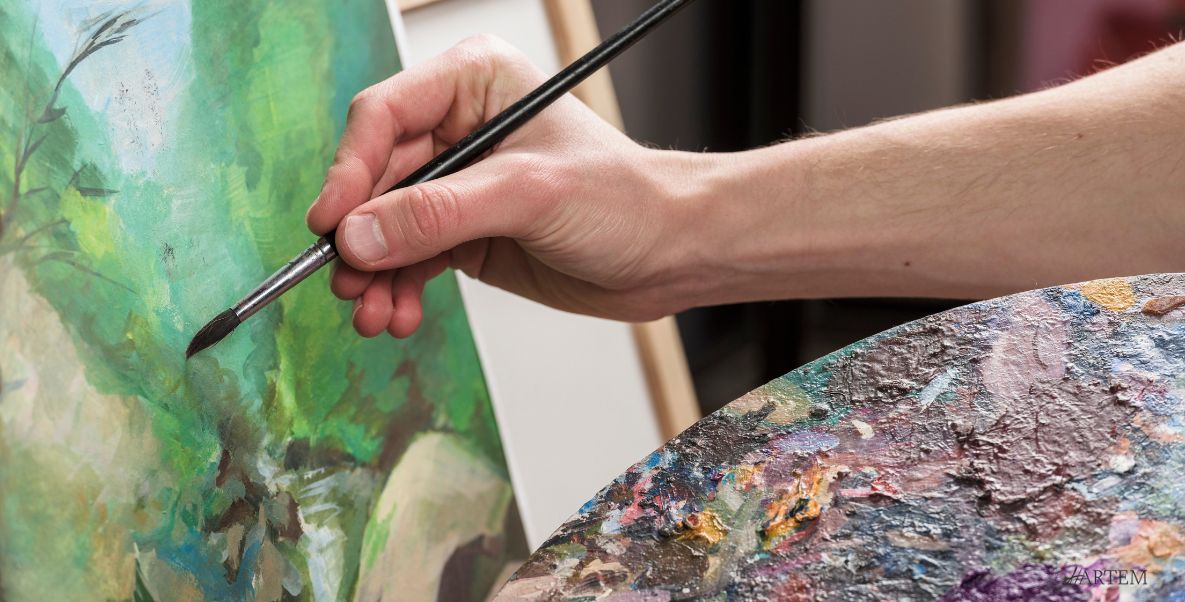
Mediums:
- Mediums with drying agents: these have powerful drying properties even in small quantities, improving the durability a
- MBlending and glazing mediums. They improve the transparency and depth of colours while allowing the viscosity and drying time to be adjusted, making it easier to create smooth colour blends and perfect glazes.
- Paste medium. Ideal for mixing powder pigments to achieve high-viscosity pastes with great shine, transparency, and flexibility. It dries quickly as it contains drying agents. Perfect for achieving textures.
- Eco-friendly mediums. Available in liquid or gel form. They allow the consistency of oil paint to be maintained without thinning the product too much. It is environmentally friendly, making it a perfect non-toxic and eco-friendly alternative to conventional solvent-based oil mediums.
- Medium W.This medium is specially designed to make traditional oil paint water-soluble. You should mix 2 parts oil with 1 part medium to obtain the desired consistency and optimal results. You can then clean and dilute with water. It does not affect the composition of the oils, but it does affect their drying time and increases their shine and transparency.
These are some mediums you can start using with your oil paints. Be bold, experiment and discover them for yourself.
Related products to this post
Want to unleash your creativity? Want to know which products we have mentioned in this post? Here they are:


