

If you're passionate about art and like to experiment with different media, you've probably wondered about the differences between oil sticks and oil pastels.
We often think that they're one and the same material. Yet both promise a rich and expressive experience, but what are the real distinctions?
Oil paint sticks and oil pastels, differences
First, we need to look at their physical components:
The oil stick is composed mainly of pigments and oils, with a small amount of wax for consistency. It takes the form of a stick, similar to a thick wax crayon, which brings freedom and expressiveness to the application of colour. It gives the artist the experience of painting by simulating traditional oil colours, but with the smooth consistency and freedom of working with pastels.

X ![]()
X ![]()
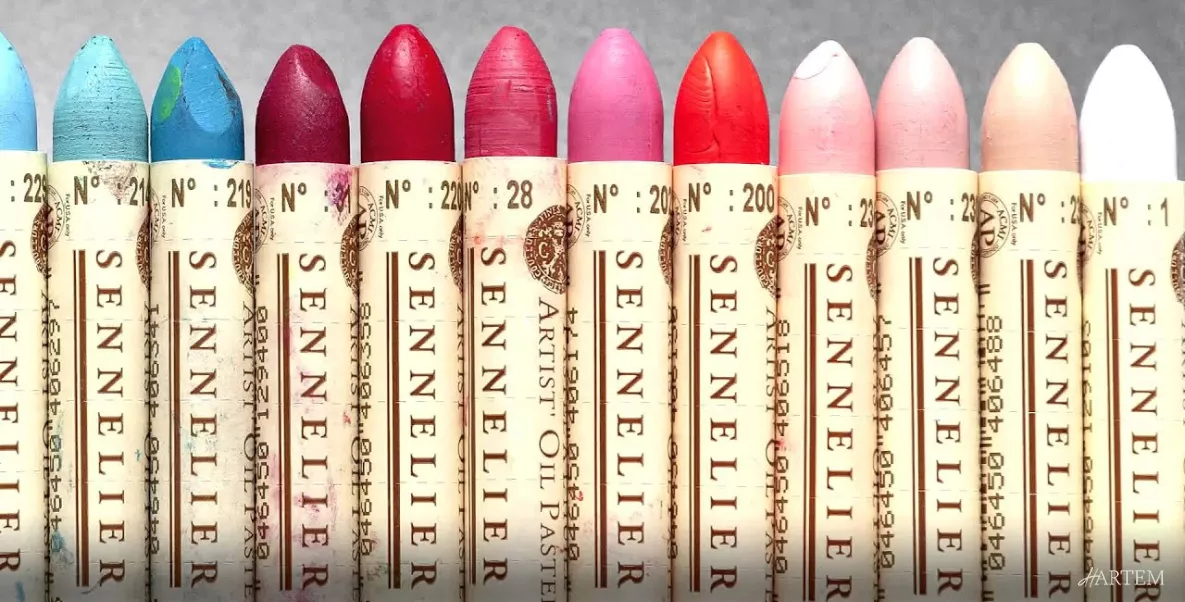
Characteristics of oil paint sticks and oil pastels.
Knowing this, it is possible to probe further into a number of issues:- Texture. Oil paint sticks retain a creamy texture similar to that of oil paints in tubes, while oil pastels, although smooth and creamy, can become slightly powdery.
- Intensity. In both types of paint, the intensity is high, but oil pastels may require additional coats to achieve optimum intensity. Oil paint sticks contain a large amount of colour in a single layer.
- Blending. Both provide easy transitions and smooth gradients.
- Drawing Finish This is where one of the most notable differences lies, since oil paint sticks have a glossy finish due to their oil composition, while oil pastels are more matt or satin (depending on the number of coats and the application technique). In both cases, it is possible to obtain impasto effects and textures, but more easily with oil pastels.
- Drawing Time. Another important difference is the drying time. A stick of oil paint dries slowly (as does oil paint in a tube), allowing for retouching and effects similar to those of traditional oil paint. Oil pastels dry more quickly, but still allow for later modifications.
- Drawing Fixation. Due to its slow drying time and properties, oil paint sticks require the application of a varnish to protect the work and its colour and gloss characteristics. It is also advisable to fix oil pastels, although this is not essential, as their composition is not as volatile as that of traditional pastels.
Application and Auxiliary Products
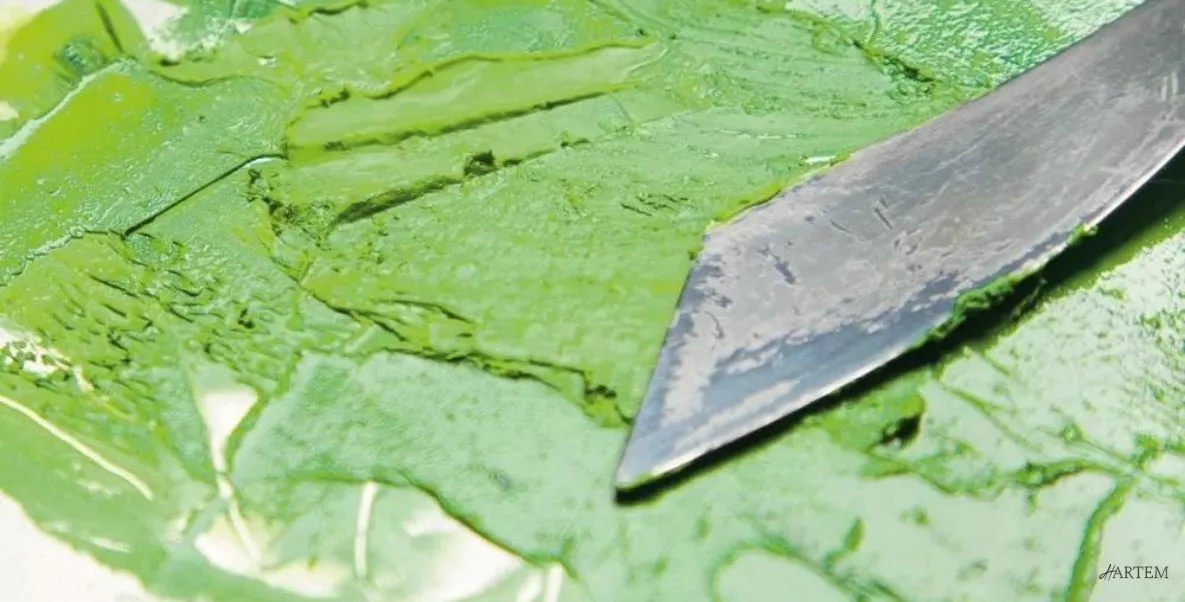
Turpentine is a solvent traditionally used to dilute oil colours to facilitate application, brush cleaning and the creation of glazes. As oil colours are mainly composed of pigments and oils, turpentine is compatible with both and can be used to modify their consistency and behaviour.Both share a particular application format that allows extraordinary freedom. You can apply the oil paint stick directly to the canvas or paper, then use a brush to blend, mix and create effects. You can also use a little turpentine to dilute the stick and make it easier to apply with a brush, resulting in smoother strokes and glazes.
Although pastels are traditionally applied directly to the surface, you can also use a dry brush to blend and mix the colours. You can also apply a little oil pastel solvent (or even mineral oil) to the brush to achieve more painterly effects and blend the colours together.

X ![]()
X ![]()
Which one to choose? It all depends on your artistic point of view:
If you're looking for the intensity and versatility of traditional oil paint, but in a more practical and direct format, the Oil Paint Stick is your best bet. It's ideal for creating works with vibrant colours, rich textures and impasto effects. However, if you prefer a softer, more delicate colour experience, with the ability to blend and blend easily, oil pastels will win you over. They're perfect for subtle transitions, ethereal atmospheres and glazing effects.Several formats are available to try out these versatile products. You can choose to create your own palette with individual sticks, or buy sets or boxes of the colours you need to start any project.
In terms of media, they can be used on pastel or mixed paper, card, canvas, or wooden panels. Thanks to their dense composition, they hold well on any surface.
Don't hesitate to experiment and combine the two tools in your creations. Pencils and oil pastels complement each other perfectly to create unique works of art full of personality. Try them both and discover all the possibilities they offer!


