Murillo y las metáforas de la imagen B Navarrete Prieto Spanish is available to buy in increments of 1
Add to Wish List
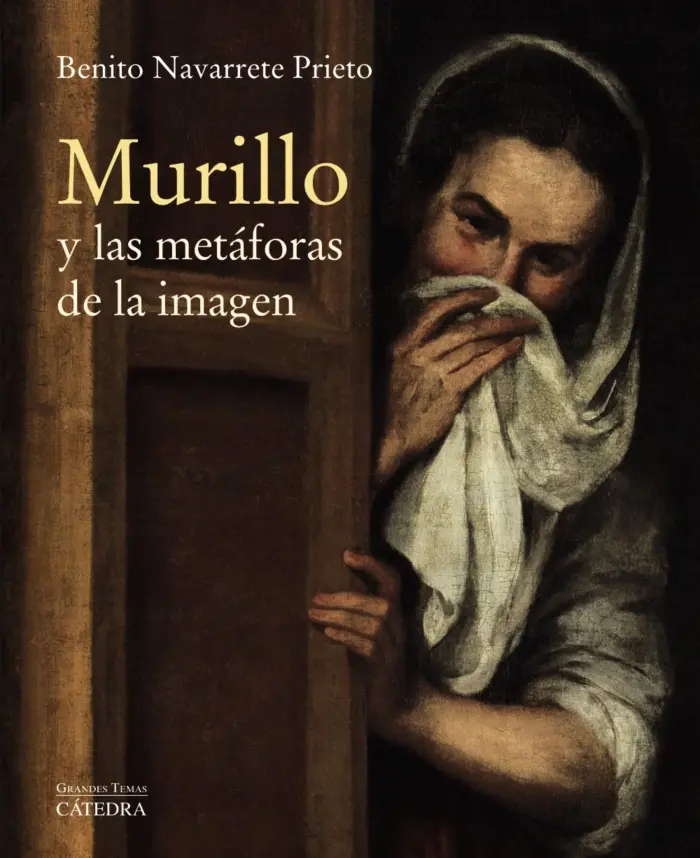
Murillo is one of the Castilian painters who has attracted most attention in historiography from the 17th century to the present day, with changing evaluations of his work depending on the period. He is an artist who has been instrumentalised and used for the communication capacity that his work has had and continues to have, something for which the painter himself was responsible from the very moment he established himself in his native Seville, enjoying a prestige during his lifetime that he achieved thanks to the resources of his art, his talent and also his ability to provoke emotions and arouse passions. Thanks to visual culture and the analysis of what his images have been able to arouse, his painting can be better understood, as if they were prophecies. What is apparently easy and straightforward is nothing more than the mirror of a complicated empathetic game whose sole purpose is the persuasion and seduction of a skilful connoisseur of Seville's codes and the resources provided by painting. Murillo often anticipated the public's responses, producing works in which the aura prevailed, opening the way to his prestige and captivating and exciting collectors who, subjugated by his language, worshipped him to the point of making his work a religion. In this spirit, his persuasive abilities have remained in force throughout history, giving clear proof of the triumph of his work over time.
Language: Spanish
Pages: 360
More Information
Brand
Editorial
Materia
Color
Idioma
Español
Murillo y las metáforas de la imagen B Navarrete Prieto Spanish
You are trying to visit Hartem USA website. Do you want to continue on this website?
https://hartem.com/en-us/murillo-and-the-metaphors-of-the-image.html154411Murillo y las metáforas de la imagen B Navarrete Prieto Spanish<p>Murillo is one of the Castilian painters who has attracted most attention in historiography from the 17th century to the present day, with changing evaluations of his work depending on the period. He is an artist who has been instrumentalised and used for the communication capacity that his work has had and continues to have, something for which the painter himself was responsible from the very moment he established himself in his native Seville, enjoying a prestige during his lifetime that he achieved thanks to the resources of his art, his talent and also his ability to provoke emotions and arouse passions. Thanks to visual culture and the analysis of what his images have been able to arouse, his painting can be better understood, as if they were prophecies. What is apparently easy and straightforward is nothing more than the mirror of a complicated empathetic game whose sole purpose is the persuasion and seduction of a skilful connoisseur of Seville's codes and the resources provided by painting. Murillo often anticipated the public's responses, producing works in which the aura prevailed, opening the way to his prestige and captivating and exciting collectors who, subjugated by his language, worshipped him to the point of making his work a religion. In this spirit, his persuasive abilities have remained in force throughout history, giving clear proof of the triumph of his work over time.</p><p>Language: Spanish</p><p>Pages: 360</p>https://static.hartem.com/media/catalog/product/M/u/La-epoca-de-las-catedrales-13122024125221.webp0instock32.44010032.44000https://static.hartem.com/media/catalog/product/M/u/La-epoca-de-las-catedrales-13122024125221.webp/Libros de teoría del color y el arte/Editorial1734178009000