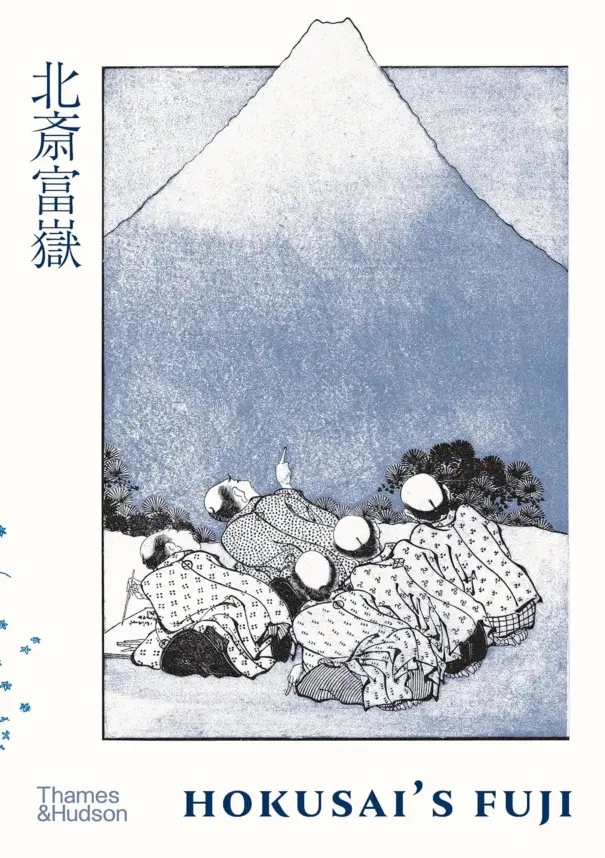
Hokusai's Fuji K Hokusai English is available to buy in increments of 1
Add to Wish List
A beautifully illustrated exploration of one of Hokusai's key motifs: Mount Fuji. The Thirty-Six Views of Mount Fuji and the three volumes of his later One Hundred Views of Mount Fuji show his fascination with a single motif: Mount Fuji. Hokusai's near-obsession with Fuji was part of his yearning for artistic immortality: in the Buddhist and Taoist tradition, Fuji was believed to hold the secret of eternal life, as suggested by a popular interpretation of its name: "Fu-shi" ("not death"). Thirty-six views of Mount Fuji were produced between about 1830 and 1832, when Hokusai was in his seventies and at the peak of his career. Among the prints are three of the artist's most famous: The Great Wave of Kanagawa, Gentle Wind, Clear Morning and Storm under the Peak. By the time he created his second major tribute to Mount Fuji, three volumes comprising One Hundred Views of Mount Fuji, he was already using the artistic names Gakyo rojin ("Old Fool for Painting") and Manji ("Ten Thousand Things" or "Everything"). Contrasting the steadfastness and solidity of the mountain with the ravages of the surrounding elements, Hokusai depicts Fuji through different seasons, weather conditions and scenery, thereby communicating an important message: while life changes, Fuji stands still.
You are trying to visit Hartem USA website. Do you want to continue on this website?
https://hartem.com/en-us/hokusai-s-fuji.html158645Hokusai's Fuji K Hokusai English<p>A beautifully illustrated exploration of one of Hokusai's key motifs: Mount Fuji.<br/>The Thirty-Six Views of Mount Fuji and the three volumes of his later One Hundred Views of Mount Fuji show his fascination with a single motif: Mount Fuji. Hokusai's near-obsession with Fuji was part of his yearning for artistic immortality: in the Buddhist and Taoist tradition, Fuji was believed to hold the secret of eternal life, as suggested by a popular interpretation of its name: "Fu-shi" ("not death"). Thirty-six views of Mount Fuji were produced between about 1830 and 1832, when Hokusai was in his seventies and at the peak of his career. Among the prints are three of the artist's most famous: The Great Wave of Kanagawa, Gentle Wind, Clear Morning and Storm under the Peak. By the time he created his second major tribute to Mount Fuji, three volumes comprising One Hundred Views of Mount Fuji, he was already using the artistic names Gakyo rojin ("Old Fool for Painting") and Manji ("Ten Thousand Things" or "Everything"). Contrasting the steadfastness and solidity of the mountain with the ravages of the surrounding elements, Hokusai depicts Fuji through different seasons, weather conditions and scenery, thereby communicating an important message: while life changes, Fuji stands still.</p><li>Pages: 416</li><li>Language: English</li><li>Author: Katsushika Hokusai</li><li>Year: 2024</li><li>MODEL: 9780500026557</li><p>Publisher: Thames and Hudson</p>https://static.hartem.com/media/catalog/product/T/H/Ateliers-of-Europe-26032025234729.webp0instock38.69010038.69000https://static.hartem.com/media/catalog/product/T/H/Ateliers-of-Europe-26032025234729.webp/Libros de teoría del color y el arte/Editorial1743039967000