Jackson Pollock Phaidon Focus H Harrison English is available to buy in increments of 1
Add to Wish List
Jackson Pollock
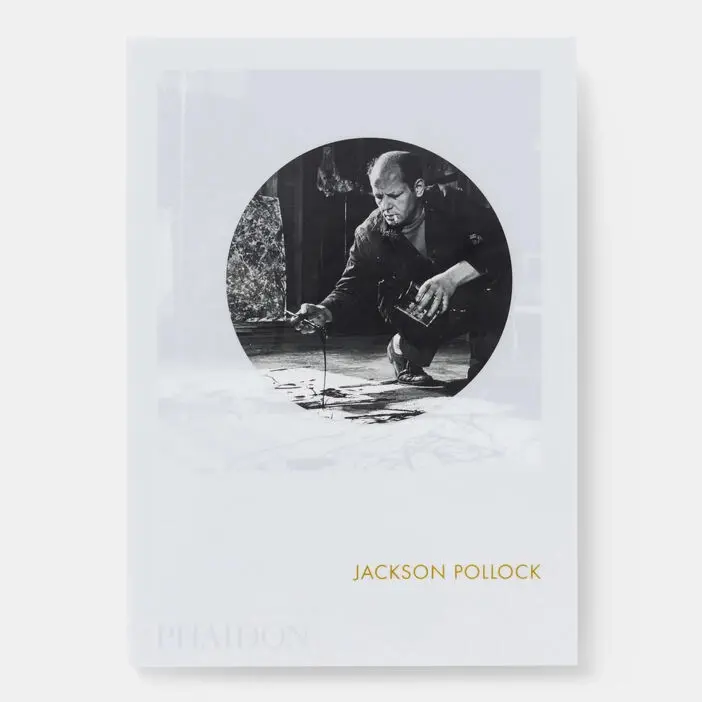
Jackson Pollock's pioneering drip technique (19121956) introduced the notion of Action Painting, in which the canvas became the space with which the artist actively engaged.
Reminiscent of Surrealist notions of the subconscious and automatic painting, Pollock's abstract works cemented his reputation as the most critically acclaimed proponent of Abstract Expressionism.
His visceral engagement with emotions, thoughts and other intangibles lends his abstract imagery an extraordinary immediacy, while his deft use of fluid pigment, applied with dancing movements and sweeping gestures that rarely touched the surface, broke decisively with tradition.
At first glance, Pollock's vigorous method appears to create chaotic labyrinths, but on closer inspection its strong rhythmic structures become apparent, revealing a fascinating complexity and deeper meaning.
Far from being calculated to shock, Pollock's liquid medium was crucial to his pictorial goals. It proved to be the ideal vehicle for the mercurial content with which he sought to communicate energy and movement, making visible memories held in space.
You are trying to visit Hartem Europe website. Do you want to continue on this website?
https://hartem.com/en-ie/jackson-pollock-phaidon-focus.html157110Jackson Pollock Phaidon Focus H Harrison English<p>Jackson Pollock</p>
<li> <p>Jackson Pollock's pioneering drip technique (19121956) introduced the notion of Action Painting, in which the canvas became the space with which the artist actively engaged.</p> </li> <li> <p>Reminiscent of Surrealist notions of the subconscious and automatic painting, Pollock's abstract works cemented his reputation as the most critically acclaimed proponent of Abstract Expressionism.</p> </li> <li> <p>His visceral engagement with emotions, thoughts and other intangibles lends his abstract imagery an extraordinary immediacy, while his deft use of fluid pigment, applied with dancing movements and sweeping gestures that rarely touched the surface, broke decisively with tradition.</p> </li> <li> <p>At first glance, Pollock's vigorous method appears to create chaotic labyrinths, but on closer inspection its strong rhythmic structures become apparent, revealing a fascinating complexity and deeper meaning.</p> </li> <li> <p>Far from being calculated to shock, Pollock's liquid medium was crucial to his pictorial goals. It proved to be the ideal vehicle for the mercurial content with which he sought to communicate energy and movement, making visible memories held in space.</p>
<li>Pages: 144</li><li>Language: English</li><li>Author: Helen Harrison</li><li>Year: 2014</li><li>MODEL: 9780714861500</li><p>Publisher: Phaidon</p>https://static.hartem.com/media/catalog/product/9/7/Theodore-Gericault-04032025133238.webp0instock19.95010019.95000https://static.hartem.com/media/catalog/product/9/7/Theodore-Gericault-04032025133238.webp/Phaidon/Colour and Art Theory Books1741264883000