Cómo saborear un cuadro V I Stoichita Spanish is available to buy in increments of 1
Add to Wish List
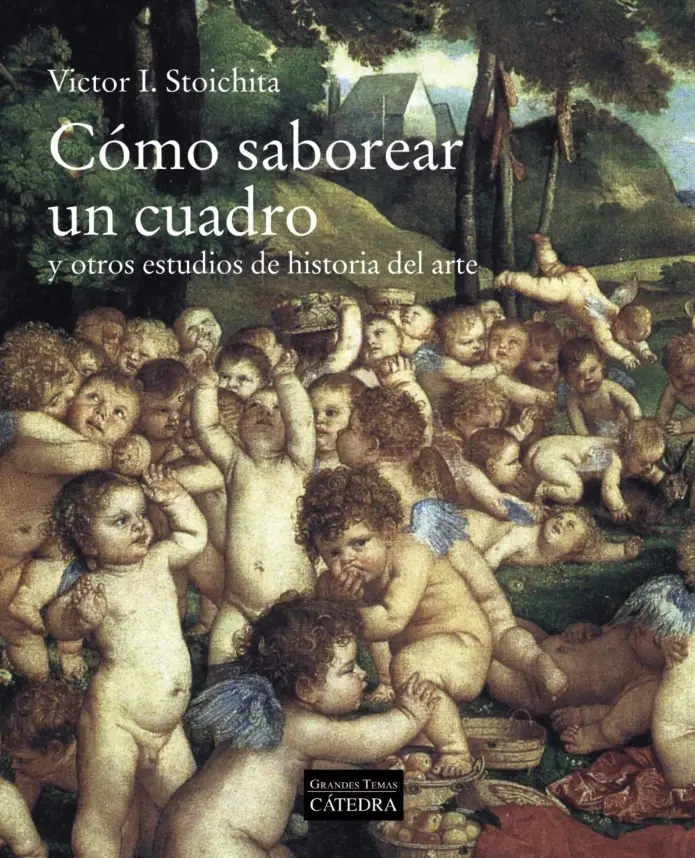
Despite the title, this book offers neither advice nor recipes for savouring painting; indeed, the author's desire is to sow, or rather to consolidate a doubt, a doubt about the ability to "savour" a work of art in the absence of understanding it. In other words, one of his postulates is that the pleasure of a work of art increases with knowledge of the context of its creation. The works analysed in this text were produced in different periods and employ different strategies of seduction: some are images made for princes ("The Feast of Venus" by Titian), others for the absolutist court ("The Surrender of Breda" by Velázquez), and also for the "people" (Warhol's silkscreen prints), others even for the artist himself (Rembrandt's self-portraits). The capacity of the work of art to question is great, and approaching it means allowing oneself to be carried away by the game of interpretation. To interpret in order to understand, to taste, to enjoy. The apple that the little love in Titian's "The Feast of Venus" smells, bites or is about to throw at the spectator is a sign of complicity. A sign, so sensual, so edible. But there are others, less obvious, more secret. This book aims to help discover them.
You are trying to visit Hartem Europe website. Do you want to continue on this website?
https://hartem.com/en-ie/how-to-savour-a-painting.html154413Cómo saborear un cuadro V I Stoichita Spanish<p>Despite the title, this book offers neither advice nor recipes for savouring painting; indeed, the author's desire is to sow, or rather to consolidate a doubt, a doubt about the ability to "savour" a work of art in the absence of understanding it. In other words, one of his postulates is that the pleasure of a work of art increases with knowledge of the context of its creation. The works analysed in this text were produced in different periods and employ different strategies of seduction: some are images made for princes ("The Feast of Venus" by Titian), others for the absolutist court ("The Surrender of Breda" by Velázquez), and also for the "people" (Warhol's silkscreen prints), others even for the artist himself (Rembrandt's self-portraits). The capacity of the work of art to question is great, and approaching it means allowing oneself to be carried away by the game of interpretation. To interpret in order to understand, to taste, to enjoy. The apple that the little love in Titian's "The Feast of Venus" smells, bites or is about to throw at the spectator is a sign of complicity. A sign, so sensual, so edible. But there are others, less obvious, more secret. This book aims to help discover them.</p><p>Language: Spanish</p><p>Pages: 336</p>https://static.hartem.com/media/catalog/product/C/o/El-Prado--la-cultura-y-el-ocio-(1819-1939)-13122024132610.webp0instock29.95010029.95000https://static.hartem.com/media/catalog/product/C/o/El-Prado--la-cultura-y-el-ocio-(1819-1939)-13122024132610.webp/Colour and Art Theory Books/Editorial1734178282000