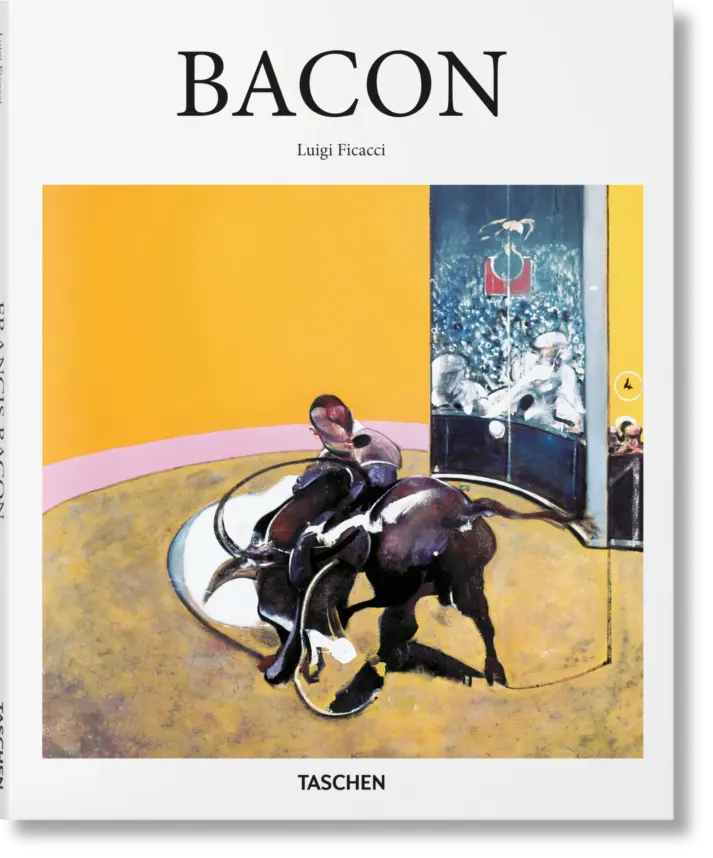
A brief and exciting encounter with Francis Bacon, one of the most personal, powerful and disturbing painters of the 20th century. Bacon came to prominence after the Second World War, developing a unique figurative form, distorted, dismembered and twisted with intense emotional content.
Ways of Feeling
The Tormented Human Body
Largely self-taught, Francis Bacon (1909-1992) developed a unique ability to transform inner, unconscious impulses into intensely claustrophobic figurative forms and compositions. He came to prominence in the post-World War II period and made the human body his symbolic subject, depicting it disfigured, distorted and dismembered, as if writhing and wailing with intense emotional charge. His fascinating and often grotesque portraits, with flailing limbs, hollows and monstrous protrusions, as well as character studies, are reflections on the challenges and traumas of the human condition. These disturbing forms were also the first to manifest an overt homosexual theme in the history of art. This book presents Bacon's erotic, disturbing and haunting work, a transformative work often emulated, much analysed and, above all, felt.
About the author
Luigi Ficacci studied art history in Rome under Giulio Carlo Argan. For many years he was curator of the Istituto Nazionale per la Grafica in Rome and superintendent of cultural property in Bologna and Lucca, and taught at various Italian universities. Until 2021, he was director of the Istituto Centrale per il Restauro (Central Institute for Restoration) in Rome. His research work focuses on issues related to Italian and European art of the 17th and 18th centuries and contemporary art.
You are trying to visit Hartem Europe website. Do you want to continue on this website?
https://hartem.com/en-ie/francis-bacon-1909-1992-deep-beneath-the-surfaces-of-things.html158506Basic Art Series Bacon L Ficacci English<p>A brief and exciting encounter with Francis Bacon, one of the most personal, powerful and disturbing painters of the 20th century. Bacon came to prominence after the Second World War, developing a unique figurative form, distorted, dismembered and twisted with intense emotional content.</p><p>Ways of Feeling</p><p>The Tormented Human Body</p><p>Largely self-taught, Francis Bacon (1909-1992) developed a unique ability to transform inner, unconscious impulses into intensely claustrophobic figurative forms and compositions.<br/>He came to prominence in the post-World War II period and made the human body his symbolic subject, depicting it disfigured, distorted and dismembered, as if writhing and wailing with intense emotional charge. His fascinating and often grotesque portraits, with flailing limbs, hollows and monstrous protrusions, as well as character studies, are reflections on the challenges and traumas of the human condition. These disturbing forms were also the first to manifest an overt homosexual theme in the history of art.<br/>This book presents Bacon's erotic, disturbing and haunting work, a transformative work often emulated, much analysed and, above all, felt.</p><p>About the author</p><p>Luigi Ficacci studied art history in Rome under Giulio Carlo Argan. For many years he was curator of the Istituto Nazionale per la Grafica in Rome and superintendent of cultural property in Bologna and Lucca, and taught at various Italian universities. Until 2021, he was director of the Istituto Centrale per il Restauro (Central Institute for Restoration) in Rome. His research work focuses on issues related to Italian and European art of the 17th and 18th centuries and contemporary art.</p><li>Pages: 96</li><li>Language: English</li><li>Author: Luigi Ficacci</li><li>Year: 2015</li><li>MODEL: 9783836559690</li>
<p>Publisher: Taschen</p>https://static.hartem.com/media/catalog/product/0/b/Abstract-Expressionism_1.webp0outofstock15010015000https://static.hartem.com/media/catalog/product/0/b/Abstract-Expressionism_1.webp/Novedades de Bellas Artes/Libros, revistas y publicaciones/Colour and Art Theory Books/Taschen1742992188000