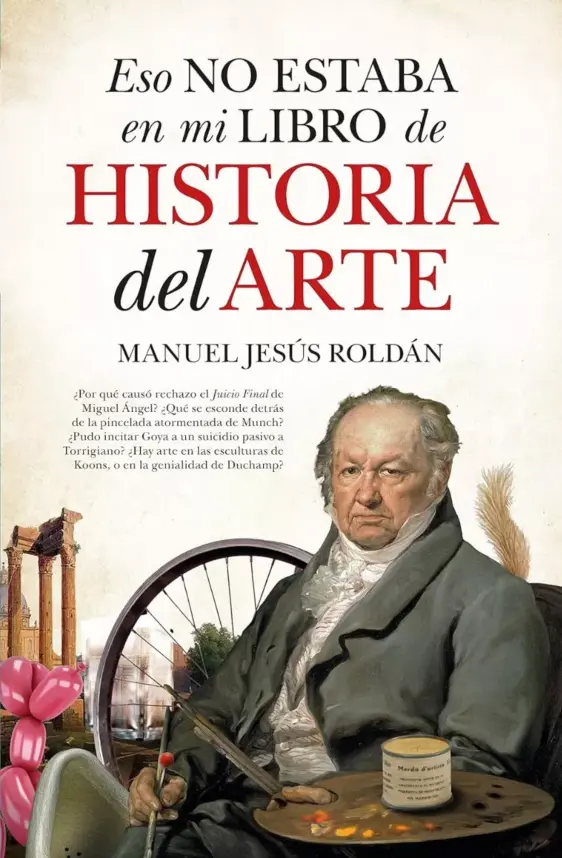
Why were there so many suicidal artists, from the Renaissance to the 20th century? What led many creators to obsessively self-portrait themselves, anticipating the selfie of the 21st century by centuries? What social networks would the Baroque painters have used if they had lived in our times? Why did the representation of female pubic hair create rejection throughout millennia of history? What provokes the repudiation of a work of art in a certain historical context and provokes its triumph in a later period? Why were the lurid facets of many creators, their violent tendencies, their deceptions, silenced? What prevented the representation of reality when the flag of decorum was raised, ignoring the fact that Christ was crucified naked, or that he had a childhood like that of other children? When did art die? With Marcel Duchamp's toilet? Or with Manzoni's canned faeces? The history of Art hides numerous aspects, omitted facts and silenced details that make up this parallel encyclopaedia, in which there is room for women forgotten for centuries, the illnesses suffered by creators, or the thousand and one circumstances that tend to go unnoticed in manuals that continue to maintain a nineteenth-century, academic and partial conception of the study of art.
Pages: 336
Language: Spanish
Author: Manuel Jesus Roldan
Year: 2023
MODEL: 9788411317702
Publisher: Almuzara
More Information
Brand
Editorial
Idioma
Español
Eso no estaba en mi Libro de Historia del Arte M Jesus Roldan Spanish
You are trying to visit Hartem Europe website. Do you want to continue on this website?
https://hartem.com/en-ie/eso-no-estaba-en-mi-libro-de-historia-del-arte.html144669Eso no estaba en mi Libro de Historia del Arte M Jesus Roldan Spanish<p>Why were there so many suicidal artists, from the Renaissance to the 20th century? What led many creators to obsessively self-portrait themselves, anticipating the selfie of the 21st century by centuries? What social networks would the Baroque painters have used if they had lived in our times? Why did the representation of female pubic hair create rejection throughout millennia of history? What provokes the repudiation of a work of art in a certain historical context and provokes its triumph in a later period? Why were the lurid facets of many creators, their violent tendencies, their deceptions, silenced? What prevented the representation of reality when the flag of decorum was raised, ignoring the fact that Christ was crucified naked, or that he had a childhood like that of other children? When did art die? With Marcel Duchamp's toilet? Or with Manzoni's canned faeces? The history of Art hides numerous aspects, omitted facts and silenced details that make up this parallel encyclopaedia, in which there is room for women forgotten for centuries, the illnesses suffered by creators, or the thousand and one circumstances that tend to go unnoticed in manuals that continue to maintain a nineteenth-century, academic and partial conception of the study of art.</p><li>Pages: 336</li><li>Language: Spanish</li><li>Author: Manuel Jesus Roldan</li><li>Year: 2023</li><li>MODEL: 9788411317702</li><p>Publisher: Almuzara</p>https://static.hartem.com/media/catalog/product/e/s/eso_no_estaba_en_mi_libro_de_historia_del_arte.webp0outofstock10010010000https://static.hartem.com/media/catalog/product/e/s/eso_no_estaba_en_mi_libro_de_historia_del_arte.webp/Editorial/Colour and Art Theory Books1713957167000